
BY: OpporTUNEity Music Staff
In this episode of inTUNE: Stories of Connection Through Music, Dr. Melissa Martirossits down with Worcester County Sheriff Lew Evangelidis for a wide-rangingconversation about music, rehabilitation, leadership, and humanity inside thecorrectional system. Sheriff Evangelidis reflects on his lifelong relationship with music, his 15-year tenure as sheriff, and his belief that incarceration—when done with dignity, accountability, and opportunity—can be a powerful catalyst for change.
Link to Podcast Episode: https://www.buzzsprout.com/2559049/episodes/18401631
From early memories of growing up surrounded by music, to discovering jazz, classical, folk, hip hop, and country throughout different stages of life, Evangelidisshares how music has remained a grounding and restorative force alongside ademanding career in law enforcement. He speaks candidly about his path from WallStreet to law school, prosecution, public office, and ultimately to reimagining what thesheriff’s office could be—not just a place of confinement, but a place of rehabilitation.
Throughout the conversation, Evangelidis explains why he believes in treatingincarcerated individuals with dignity and respect, investing in mental health andsubstance abuse services, elevating the quality of the staff, and partnering with educational and creative programs like opporTUNEity. He describes how musicprograms inside the Worcester County House of Corrections foster camaraderie, emotional expression, and cultural shifts that extend beyond the classroom and into thebroader jail environment.
Episode Summary A deep conversation about leadership, rehabilitation, and the role of music as ahumanizing and restorative force inside correctional institutions. Sheriff Evangelidis
shares how creative programming, accountability, and dignity-centered policies canreduce recidivism, strengthen community safety, and support meaningful reentry.
Key Themes• Music as a lifelong source of healing, balance, and spiritual grounding• Rehabilitation versus punishment in correctional settings• Leadership without political favoritism or “past practice” constraints• Treating incarcerated individuals with dignity and respect• The role of creative and educational programming in reducing recidivism• Music as a tool for emotional expression, camaraderie, and cultural change• Why “if the inmate wins, we all win”
The Pulse (Q&A)Topic: Using music to build community inside correctional institutions
Dr. Martiros shares three practical strategies for educators and musicians interested inteaching or starting music programs inside jails or prisons:
Partner with existing institutions
Design trauma-informed, flexible lessons
Center dignity, not charity
2. 3.
Music FeaturedAll music was written, performed, or produced by opporTUNEity students.
“5-Minute Beat (Challenge)” — Zae. Main Jail Beatmaking & Production (Spring 2025);Teaching Artists: Dan Thomas and Dan DeCristofaro
“Gratitude” — Performed by Teaching Artist Dan DeCristofaro. CollaborativeSongwriting at Everyday Miracles Recovery Center
All-Midi Scenic — Dan D. Main Jail Beatmaking & Production (Fall 2025)Teaching Artists: Dan Thomas and Dan DeCristofaro
“Wish I May” — WCHA Worcester County Housing Authority (2021)
Get in Touch
Submit questions or topics for future episodes athttps://opporTUNEitymusic.org/intune
Episode produced and edited by Angela Senicz.
Learn more about our programs, stories, and community athttps://opporTUNEitymusic.org1.
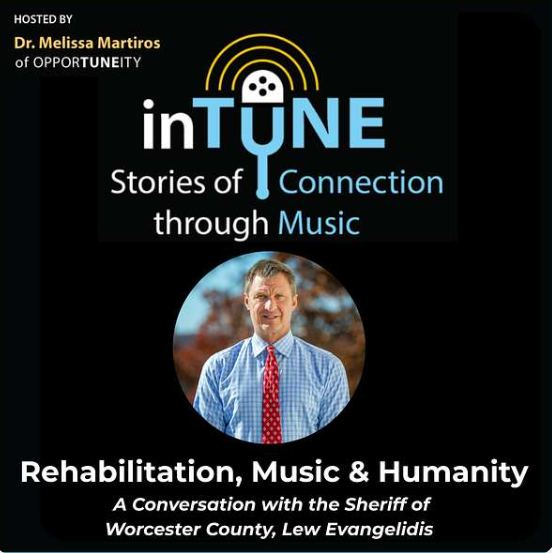
Rehabilitation, Music & Humanity — A Conversation with the Sheriff of Worcester County, Lew Evangelidis